The Fight Wasnt About the Credit Card Bill
A sample CouplePay article about how debt arguments are usually about stress, fear, and feeling alone, not just the statement balance.
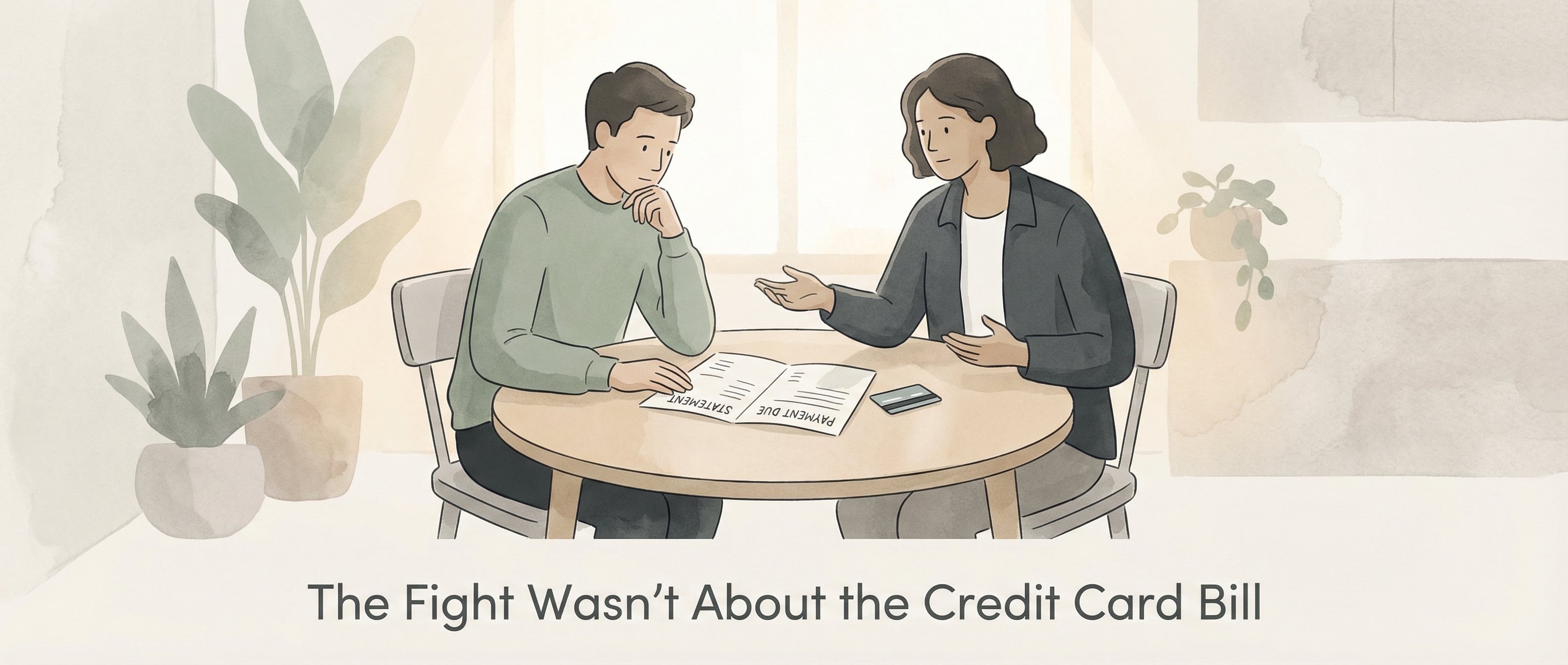
Most couples think the blow-up started with a number on a statement.
Usually it started earlier.
It started with the small pause before opening the app. The second-guessing before buying groceries. The private story each partner was telling themselves about what the debt meant.
One person might be thinking, “We are never going to get ahead.”
The other might be thinking, “I am trying, and I still feel like I am failing.”
That is why the credit card bill becomes a stand-in for something bigger. It turns into a conversation about trust, progress, control, fear, and whether you still feel like you are building a future together.
What the argument is usually really about
The bill is only the trigger. Under it, couples are often reacting to one of these:
- Feeling judged for past decisions
- Feeling alone in the payoff plan
- Feeling like there is no visible progress
- Feeling like every purchase is now emotionally loaded
When that tension is invisible, every monthly review feels heavier than it should.
A better way to talk about it
A productive debt conversation does not start with blame. It starts with shared context.
Try a simple reset:
- Name the current balance without editorializing.
- Agree on the next card or next payment target.
- End with one concrete win from the last month.
That structure sounds basic, but basic beats reactive.
Why this matters for CouplePay
CouplePay is being built around one idea: debt payoff should feel like a shared plan, not a recurring relationship stress test.
The app cannot solve the emotional part by itself, but it can lower the friction. Shared visibility, a clear target, and a visible debt-free date make the conversation less abstract and less adversarial.
A shared plan does not erase the debt overnight, but it does remove the fog. And once both people can see the same thing, the next step usually gets much easier to take.